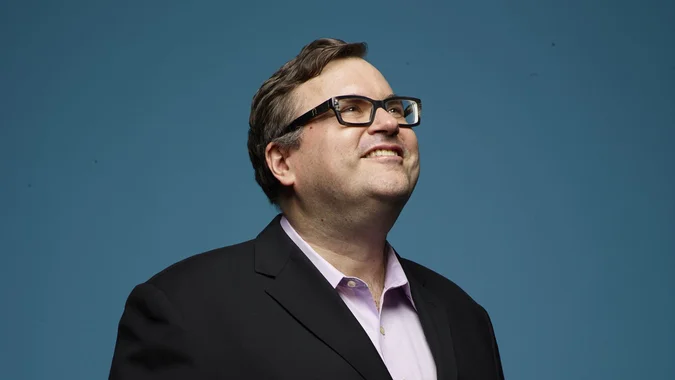
LinkedIn, the leading professional networking platform, was founded in 2002 by Reed Hoffman, an entrepreneur, investor, and visionary best known for his role in founding PayPal. He is joined by Alan Blue, Constantin Guericke, Eric Li, and Jean-Luc Vaillan, all with extensive experience in the technology sector. Hoffman, a Stanford and Oxford graduate, is driven by the belief that professional networks are key to success, but that traditional networking methods, business cards, conferences, and in-person meetings, are limited and ineffective in the digital age.
The idea for LinkedIn came about at a time when the Internet was beginning to transform social interactions. Social networks like Friendster and MySpace already existed, but they were focused on personal connections. Hoffman saw a gap in the market for a platform that would facilitate professional networking, support career development, and serve as a digital resume. In December 2002, the team began working from Hoffman's home, and on May 5, 2003, LinkedIn officially launched.
The first version of the platform was simple: users could create profiles, add contacts, and share information about their education and professional experience. Despite the ambitious vision, the beginnings were modest – by the end of 2003, LinkedIn had only 6,000 users, and growth was slow due to the unfamiliar concept of digital professional networking.
[ez-toc]
The technological context of the 2000s
LinkedIn emerged at a pivotal time for the tech sector. The early 2000s were marked by the recovery from the dot-com bust, but also by growing optimism about the potential of the internet. Web 2.0, with its focus on interactivity and user-generated content, was shaping the digital landscape. Technologies like AJAX and faster internet connections enabled the creation of dynamic web platforms.
LinkedIn took advantage of these technological capabilities to offer an intuitive interface, but initially faced limitations such as slow page loading and lack of mobile support. These problems would be resolved in later years with improvements in infrastructure and the launch of mobile apps.
Challenges in the early years
LinkedIn's early years were fraught with difficulties. Competition was fierce, platforms like Monster and CareerBuilder dominated the job market, while European networks like Xing attracted regional users. Many professionals saw no need for a digital network, relying on traditional networking methods. Financial challenges were also serious, LinkedIn relied on Hoffman's personal savings and small investments from friends.
In 2004, the first major investment from Sequoia Capital ($4.7 million) gave the development a boost. The money allowed the team to hire engineers, improve infrastructure, and add features such as professional groups and job search. These improvements began to attract employers and recruiters, laying the foundation for future success.
Early successes and validation
By 2006, LinkedIn had reached 5 million users, and by 2008, 33 million. The introduction of premium subscriptions in 2005, which offered features like InMail (direct messaging to strangers) and advanced search, proved to be a successful business model. The platform began to be perceived not only as a job search tool, but also as a place to build a professional image.
LinkedIn stands out from its competitors by its focus on quality connections. Unlike MySpace or the early Facebook , LinkedIn requires users to know their connections, which creates a more trusted network. This approach attracts serious professionals and companies looking for highly qualified personnel.
Global expansion and innovation
After 2010, LinkedIn entered a period of rapid growth. The platform began supporting over 20 languages and opened offices in countries such as India, China, Brazil, and Australia. In 2011, LinkedIn went public, with an initial public offering (IPO) on the New York Stock Exchange raising $352.8 million. This funding enabled further innovation, including improved recommendation algorithms and mobile apps, launched in 2011.
A key innovation was the $1.5 billion acquisition of Lynda.com in 2015, which became LinkedIn Learning, a platform for online courses covering skills from coding to leadership. Other acquisitions, such as Bright (2014) and Connectifier (2016), improved recruiting capabilities.
In 2016, Microsoft acquired LinkedIn for $26.2 billion , a deal that integrated the platform with Microsoft products like Outlook, Dynamics 365, and Microsoft Teams. The partnership broadened LinkedIn’s reach while preserving its identity and mission.

Impact on the labor market
LinkedIn is revolutionizing the job market. According to 2023 data, over 60% of American companies use LinkedIn for recruiting, and millions of users find jobs through the platform annually. Features like “Open to Work” and “Hiring” facilitate direct communication between candidates and employers. The platform democratizes access to opportunities, allowing professionals from smaller cities or developing countries to connect with global companies.
LinkedIn contributes to diversity and inclusion by providing tools to promote equality in hiring. Features like “Skills Insights” help users identify in-demand skills, and initiatives like LinkedIn for Nonprofits support organizations working for social justice.
Adapting to cultural differences
LinkedIn adapts to the diverse professional cultures around the world. In Japan, where business etiquette is strict, the platform emphasizes formality in profiles and communication. In India, LinkedIn supports young professionals and startups through localized events and content. In China, before exiting the market in 2021 due to regulatory challenges, LinkedIn offered a locally compliant version called InCareer.
Technological innovations
Today, LinkedIn relies on artificial intelligence and machine learning to personalize the user experience. Algorithms analyze profiles, behavior, and market trends to recommend relevant positions, contacts, and content. Features like “Career Explorer” help users plan career changes, while analytics tools allow companies to optimize their listings. LinkedIn has also experimented with video content and virtual events, especially in the wake of the COVID-19 pandemic.
Criticisms and challenges
Despite its success, LinkedIn has also faced criticism. Data privacy is a major concern, especially after breaches like the one in 2012, when 6.5 million passwords were compromised. The platform has also been criticized for its high premium subscription prices, which limit access for some users. In addition, the algorithms sometimes offer inappropriate recommendations, which can be frustrating for users.
LinkedIn faces challenges related to content moderation. Fake profiles, spam, and misinformation require ongoing investments in security systems and artificial intelligence to detect them.

LinkedIn today
By 2025, LinkedIn will have over 1 billion users in more than 200 countries. The platform has evolved into a complete ecosystem for career development, knowledge sharing, and business opportunities. During the pandemic, LinkedIn introduced features such as “remote work” labeling and support for virtual interviews, reflecting the new realities of the job market.
LinkedIn is also establishing itself as a media platform. Articles, posts, and influencer content attract millions of views, making the platform a hub for professional discussions. Initiatives like LinkedIn News provide analysis of market trends, and events like Talent Connect bring together industry leaders.
Future prospects
The future of LinkedIn is connected to innovations in artificial intelligence, augmented reality and blockchain. Virtual interviews with AR/VR technologies or verification of diplomas via blockchain can improve trust and efficiency. LinkedIn will likely expand LinkedIn Learning by adding more interactive courses and certifications.
Challenges such as regulatory pressures, competition from new platforms, and the need for greater accessibility will require strategic decisions. Integration with Microsoft products could lead to new features, such as AI assistants for profile creation or automated career advice.
Conclusion
LinkedIn began as an ambitious idea in Reed Hoffman’s home, but it has become a global phenomenon that has transformed the job market and professional networking. From its humble 6,000 users in 2003 to over 1 billion today, LinkedIn has demonstrated the power of innovation, adaptation, and strategic partnerships. Despite its challenges, the platform continues to shape the future of work, connecting people, ideas, and opportunities around the world.
CopyVibes also offers LinkedIn profile support in its catalog of services.