LinkedIn has become a key platform for building a personal brand, attracting business opportunities, and establishing professional expertise.
According to LinkedIn data for 2024, over 60% of users actively consume content, and high-engagement posts reach three times the audience thanks to the algorithm.
But how do you create content that doesn't just appear in the feed, but also sparks reactions, dialogue, and trust? Here are 8 in-depth and practical tips, based on years of marketing experience, that will help you achieve just that.
[ez-toc]
1. Tell a story that creates an emotional connection
People remember stories, not facts. A Stanford University study found that information presented as a story is remembered up to 22 times better than dry data. On LinkedIn, storytelling is especially powerful because it creates authenticity and allows your audience to connect with you on a personal level. The platform’s algorithm also favors posts that generate engagement within the first hour of posting, and stories are perfect for this.
How to do it? Start with a short story – a personal experience, a client success, or a challenge you overcame. For example: “In 2019, I published my first LinkedIn post and got zero responses. I felt invisible. After months of testing, I found a strategy that now brings me thousands of impressions per week.” Add details (when, where, how) to bring the story to life, and end with a lesson or question that invites your audience to engage, such as: “When was the last time you tried something new on LinkedIn? Share in the comments!”
Practical advice: Write in the first person and be sincere. Avoid overly long stories – 3-5 sentences are enough to grab attention.
2. Ask strategic questions for more dialogue
LinkedIn is a social network, not a platform for monologue. Posts that generate comments get more visibility because the algorithm interprets reactions as an indicator of quality. According to a 2023 HubSpot study, posts with questions generate 50% more comments than those without. Asking the right questions can turn your post into a discussion that engages and expands your audience.
How to do it? Avoid general questions like “What do you think?” Instead, ask specific, open-ended questions that require thought or sharing of experience: “What LinkedIn strategy brought you the most results this year?” or “How do you overcome your fear of posting on the platform?” Place the question in the middle or end of the post to keep attention, and respond to every comment to stimulate dialogue.
Practical tip: Take the time to respond to comments within the first two hours of posting. This not only increases engagement, but also “refreshes” the post in the feed.
3. Format for maximum readability
Over 57% of LinkedIn users access the platform via mobile devices (LinkedIn data, 2024). This means your content needs to be easy to read on a small screen. Long paragraphs and complex sentences repel readers, while well-formatted text keeps attention and increases the time spent on your post – a key factor for LinkedIn’s algorithm, which measures so-called “dwell time.”
How to do it?
-
Write short sentences (10-15 words).
-
Divide the text into one-line or two-line paragraphs.
-
Use bold text or italics to emphasize important ideas.
-
Add bulleted or numbered lists.
-
Include blank lines for visual "breaks."
Practical tip: Before publishing, preview your post on a mobile device. Use 2-3 emojis for visual emphasis, but avoid overdoing it so it doesn't look frivolous.
4. Offer specific and actionable advice
LinkedIn audiences value content that solves problems or offers new ideas. Posts with practical “hacks” or strategies are among the most shared because they provide “quick value.” A 2023 Buffer analysis shows that posts with specific tips or lists (e.g., “5 ways to…”) are 40% more likely to be shared.
How to do it? Instead of general phrases like “Be active,” give specific recommendations: “Post on Tuesdays and Thursdays between 8:00 and 10:00 AM, when engagement is highest (2024 data).” Or “Create a LinkedIn carousel with 5-7 slides to explain a complex idea – they generate 3x more engagement than text posts.” Back up your advice with data or examples to increase credibility.
Practical tip: Use the format “X tips for…” or “How to achieve Y in Z steps.” For example: “Three ways to double your LinkedIn engagement in 30 days.”
5. Go for visual content
Visuals increase engagement on LinkedIn by up to two times, according to the platform (2024). Images, videos, and carousels grab attention and make your content more memorable. Even a simple graphic with a quote can make your post more visible.
How to do it? Use tools like Canva to create graphics or infographics. Videos, even short ones (1-2 minutes), are especially effective because they show your personality and build trust. For example, share a 60-second video in which you explain a quick marketing tip. Carousels (PDF files with multiple slides) are ideal for step-by-step guides.
Practical tip: Add subtitles to videos, as many users watch without sound. For carousels, use 5-7 slides with clear text and a minimalist design.
6. Demonstrate expertise with authenticity
LinkedIn is a place to share knowledge, but no one likes to brag. Instead of saying, “I’m the best marketer,” share a lesson from your experience: “After 10 years in marketing, I’ve learned that listening to your customers is more important than any campaign.” Sharing failures is also powerful, for example, “Years ago, I invested thousands in an ad that didn’t work. It taught me to test everything on a small scale first.”
Practical advice: Balance successes and failures to show your human side. Avoid overly technical jargon to be accessible to a wider audience.
7. Include a strong call to action (CTA)
Every post should have a goal – comments, shares or visits to your website. A clear call to action tells your audience what to do after reading. For example: “Share your best LinkedIn tip in the comments!” or “Download my free LinkedIn marketing guide from the link in the first comment.”
Practical tip: Make your CTA specific and relevant to the topic. Place it at the end of the post or after a key idea so it feels natural.
8. Be consistent and analyze data
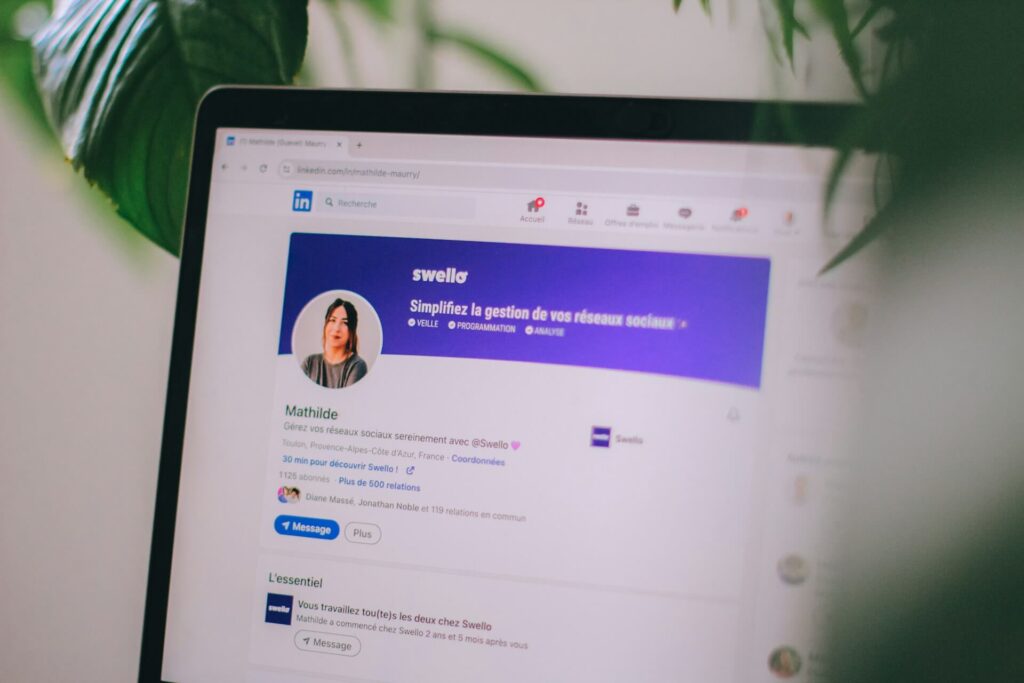
Consistency is the key to success on LinkedIn. Post 2-3 times a week and test different formats – text, video, carousels. Use LinkedIn Analytics to understand which posts work best and adapt your strategy. For example, if your videos generate more engagement, increase their frequency.
Practical tip: Experiment with posting times (e.g. 8:00-10:00 AM or 6:00 PM) and measure results. Create a content calendar to plan your posts in advance.
Conclusion
Creating engaging LinkedIn content requires a combination of strategy, authenticity, and consistency. By implementing these 8 tips, you’ll not only build visibility, but also a strong personal brand that attracts the right audience. Start with one post this week – which of these strategies will you try first?